Drillbotics Competition 2026

Drillbotics Competition 2026

The Drillbotics 2026 competition has now concluded, with strong results from student teams around the world working on autonomous drilling systems in both physical and virtual modes.

As in previous years, the Virtual Mode contest used OpenLab Drilling as the simulation environment. This gives student teams access to realistic drilling simulator data and a standardized interface for developing, testing, and demonstrating their concepts in a safe and reproducible setting.

The 2026 Virtual Mode winner was the collaboration between Palawan State University (the Philippines) and Sunway University (Malaysia). Their team developed a well control and kick detection solution and demonstrated accurate kick detection with recommended operational responses during a blind surprise test.

The University of Mines and Technology in Ghana, earned runner-up honors in Virtual Mode. Their prototype demonstrated interoperability by ingesting live simulator data from OpenLab Drilling during the competition.

In physcial mode, Instituto Tecnológico de Buenos Aires (ITBA) (Argentina) won the strong competition, while TU Clausthal (Germany) and NTNU (Norway) shared second place.

We congratulate all participating teams in Drillbotics 2026. The results show how OpenLab Drilling can support education, research, and innovation worldwide in drilling technologies by giving students and researchers a practical environment for testing new ideas before moving toward real-world implementation.

Drillbotics Competition 2026

Drillbotics Competition 2026

The Drillbotics 2026 competition has now concluded, with strong results from student teams around the world working on autonomous drilling systems in both physical and virtual modes.

As in previous years, the Virtual Mode contest used OpenLab Drilling as the simulation environment. This gives student teams access to realistic drilling simulator data and a standardized interface for developing, testing, and demonstrating their concepts in a safe and reproducible setting.

The 2026 Virtual Mode winner was the collaboration between Palawan State University (the Philippines) and Sunway University (Malaysia). Their team developed a well control and kick detection solution and demonstrated accurate kick detection with recommended operational responses during a blind surprise test.

The University of Mines and Technology in Ghana, earned runner-up honors in Virtual Mode. Their prototype demonstrated interoperability by ingesting live simulator data from OpenLab Drilling during the competition.

In physcial mode, Instituto Tecnológico de Buenos Aires (ITBA) (Argentina) won the strong competition, while TU Clausthal (Germany) and NTNU (Norway) shared second place.

We congratulate all participating teams in Drillbotics 2026. The results show how OpenLab Drilling can support education, research, and innovation worldwide in drilling technologies by giving students and researchers a practical environment for testing new ideas before moving toward real-world implementation.

OpenLab for Cybersecurity Research on Drilling Control Systems

OpenLab Drilling is widely used for research on the cybersecurity of OT (Operational Technology) systems in drilling operations. OpenLab provides a unique infrastructure for this research through its Hardware-In-The-Loop simulator.

At a recent conference held by Dragos, one of the major software suppliers in OT cybersecurity, and Laszlo Erdodi from NTNU and Fionn Iversen from NORCE presented results from attack studies conducted in OpenLab as part of the Coresim project at the Dragos Europe Forum. The work is titled "Attack Scenarios and Diagnostics for the Industrial Drilling Control System using the Dragos Platform". You can read more here: https://events.dragos.com/forums-eur26
Dragos is a key global supplier of OT system monitoring, with customers such as Equinor, Gassco, and AkerBP.

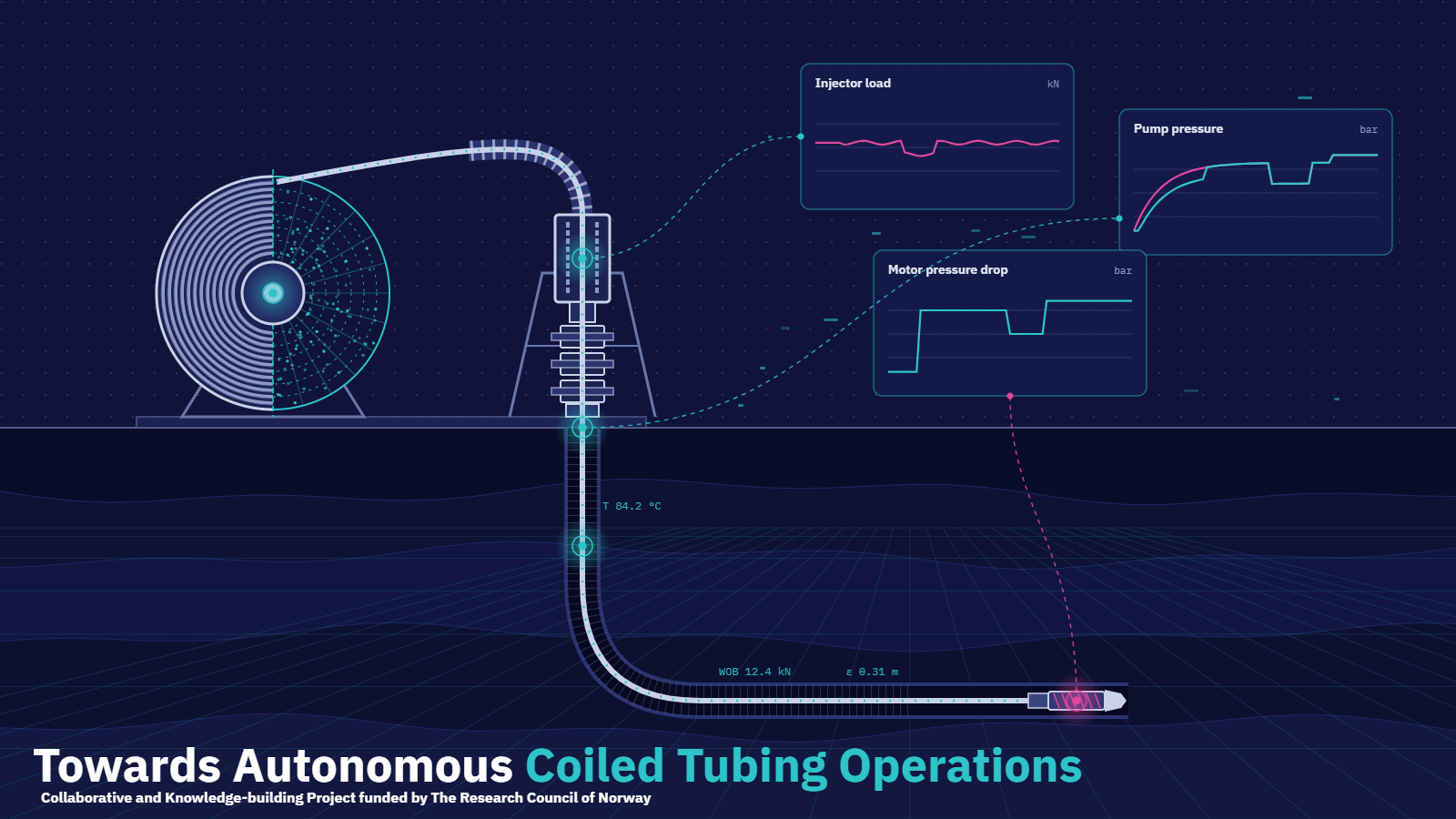
OpenLab as the front-end for the new Coiled Tubing simulator

OpenLab is now used as the front-end for running advanced coiled tubing (CT) simulations, developed in the research project "Towards Autonomous Coiled Tubing Operations". An alpha version of the CT simulator is already running in OpenLab, and coiled tubing simulations can be included in later versions of OpenLab.

Coiled tubing is widely used for well intervention, plug and abandonment (P&A), and coiled tubing drilling. Compared with jointed pipe drilling, CT operations still rely heavily on manual decision-making, and the level of automation has great potential to be developed further towards autonomy. More efficient CT operations are key to reducing costs, operational risks, and emissions.

The project "Towards Autonomous Coiled Tubing Operations" (2025–2028) is led by NORCE, in collaboration with the University of Stavanger (UiS) and TU Clausthal in Germany. The project is financed by the Research Council of Norway and the user partners Aker BP, ConocoPhillips, Equinor, Harbour Energy, and TotalEnergies.

The project is a Collaborative and Knowledge-building Project with the RCN, with the purpose of developing new knowledge and generate research competence needed by society or the business sector to address important societal challenges.

Advanced simulation models, accessible through OpenLab

A central part of the project is the development of a transient hydro-mechanical simulation model for CT operations. The model includes transient multiphase flow (liquid, gas, and particles), transient temperature in the flow line, tubing, annulus, and near-well formation, transient torque and drag, counter-torque from downhole motors, dynamic buckling limits, and tubing elongation from tension and temperature. It also models the flow through the tubing on the reel.

In the research project, OpenLab plays an important role by providing a web-based front-end for configuring and running these simulations. Users can configure CT-specific parameters such as the reel and topside CT equipment, and the well architecture and downhole tools, including the motor, and then run and monitor the simulation directly in the web client. This builds on the same infrastructure that has made OpenLab Drilling a widely used tool for research, education, and technology qualification worldwide.

Access and future releases

During the project period, the CT simulator in OpenLab will be available to project participants under a license agreement, and to researchers, students, and collaboration partners in the project.

Looking ahead, the project will use OpenLab as the environment for real-time model calibration and for developing and testing an autonomous control system integrated with the CT simulator. This follows the same path that OpenLab has already demonstrated in drilling automation: develop and test in OpenLab first, then move towards higher Technology Readiness Levels in later developments outside theKnowledge Builring Project.

The OpenLab to Ullrigg workflow

The OpenLab to Ullrigg workflow

OpenLab facilitates and accelerates the demonstration of DWIS and autonomous drilling at Ullrigg

The recent DWIS (Drilling and Wells Interoperability Standard) demonstration at NORCE’s Ullrigg Test Center from 2. - 6. March 2026 showed the unique capabilities and efficient workflow of OpenLab in practice. An important part of the successful demonstration was the extensive use of OpenLab's HIL (Hardware-In-The-Loop) simulator before and during the Ullrigg demo. You can read more about the Ullrigg demonstration here.

NORCE and partners of the DigiWells Innovation Program recently completed a successful field demonstration of the DWIS platform combined with autonomous drilling capabilities at the Ullrigg test center. OpenLab's unique HIL-simulator was used extensively before and during this demo. A key advantage is that it has the same control system and setup as Ullrigg, which makes it easy to switch from OpenLab to Ullrigg, accelerating the testing and qualification of new technology to higher TRL- Technology Readiness Level.

The objective of this test was to demonstrate autonomous drilling together with real-time interoperability, involving multiple vendor systems, and to validate DWIS as a common data infrastructure for drilling automation. The systems exchanged data via the DWIS Blackboard architecture, enabling applications to discover and use signals automatically. The Blackboard and technologies from different vendors were first connected in OpenLab with the embedded NOV control system and NOVOS, before testing at Ullrigg.

The setup with OpenLab HIL with NOV and NOVOS provides a replica of Ullrigg that makes development, testing, and demonstration far more efficient. Much of the required work can be done in OpenLab before arriving at the test facility, and the same environment can continue to support the work during the full-scale test at Ullrigg. This combination of realism, interoperability, and flexibility is a strong example of how OpenLab accelerates the development of advanced drilling automation solutions.

The Ullrigg demonstration involved contributions from multiple organizations and services, including NOV, Sekal, Halliburton, and NORCE, among others. The sponsors of the DigiWells Innovation Program are Aker BP, ConocoPhillips, Equinor, Petrobras, TotalEnergies, and Vår Energi.

The OpenLab to Ullrigg workflow

The OpenLab to Ullrigg workflow

OpenLab facilitates and accelerates the demonstration of DWIS and autonomous drilling at Ullrigg

The recent DWIS (Drilling and Wells Interoperability Standard) demonstration at NORCE’s Ullrigg Test Center from 2. - 6. March 2026 showed the unique capabilities and efficient workflow of OpenLab in practice. An important part of the successful demonstration was the extensive use of OpenLab's HIL (Hardware-In-The-Loop) simulator before and during the Ullrigg demo. You can read more about the Ullrigg demonstration here.

NORCE and partners of the DigiWells Innovation Program recently completed a successful field demonstration of the DWIS platform combined with autonomous drilling capabilities at the Ullrigg test center. OpenLab's unique HIL-simulator was used extensively before and during this demo. A key advantage is that it has the same control system and setup as Ullrigg, which makes it easy to switch from OpenLab to Ullrigg, accelerating the testing and qualification of new technology to higher TRL- Technology Readiness Level.

The objective of this test was to demonstrate autonomous drilling together with real-time interoperability, involving multiple vendor systems, and to validate DWIS as a common data infrastructure for drilling automation. The systems exchanged data via the DWIS Blackboard architecture, enabling applications to discover and use signals automatically. The Blackboard and technologies from different vendors were first connected in OpenLab with the embedded NOV control system and NOVOS, before testing at Ullrigg.

The setup with OpenLab HIL with NOV and NOVOS provides a replica of Ullrigg that makes development, testing, and demonstration far more efficient. Much of the required work can be done in OpenLab before arriving at the test facility, and the same environment can continue to support the work during the full-scale test at Ullrigg. This combination of realism, interoperability, and flexibility is a strong example of how OpenLab accelerates the development of advanced drilling automation solutions.

The Ullrigg demonstration involved contributions from multiple organizations and services, including NOV, Sekal, Halliburton, and NORCE, among others. The sponsors of the DigiWells Innovation Program are Aker BP, ConocoPhillips, Equinor, Petrobras, TotalEnergies, and Vår Energi.

OpenLab - A unique infrastructure for Cybersecurity research

OpenLab is being actively used as a digital experimentation platform in the CORESIM project (Context-Based Real-Time OT/IT Systems Integrity Management). Several experiments have been conducted in 2025, and the work continues in 2026. The project is a collaboration between NORCE, IFE, NTNU (Lead), UiO, and Equinor.

CORESIM addresses challenges related to real-time, context-aware integrity management, where operational (OT) and information (IT) systems must work seamlessly together. It aims to develop decision support to aid in selecting the best possible response to a cyber-attack on a Cyber Physical System (CPS) with respect to both cost and process integrity.

OpenLab provides a unique, flexible, and reproducible environment for integrating simulation models, data streams, and system architectures. The Hardware-In-The-Loop simulator in OpenLab is the only realistic OT simulator for real drilling process control in the world. OpenLab Drilling allows researchers to evaluate system behaviour and demonstrate concepts before they are transferred to operational settings.

Looking ahead, experience from CORESIM feeds directly into the planned developments of OpenLab towards IT/OT Cybersecurity research and development.

"By being used in active research projects like CORESIM, OpenLab continues to evolve based on real needs — ensuring relevance for both current and future research challenges.", says Jan Einar Gravdal, Chief Scientist at NORCE, and project manager of OpenLab.

OpenLab sets new usage record across three North American universities

OpenLab has reached an exciting new milestone. Over the past two weeks, the platform recorded around 150 parallel users, marking our highest level of simultaneous activity to date. Even more importantly, this surge comes from three different universities across North America, reflecting OpenLab’s growing role in advanced engineering education and research.

Students at Texas A&M University, the University of Waterloo (Canada), and the University of Alberta (Canada) have been actively using OpenLab to support specialized research tasks in control theory. These institutions are among the most respected in engineering and applied sciences, and their adoption of OpenLab highlights a broader trend: universities are increasingly turning to cloud-based, interactive simulation tools to enhance both teaching and research.

Over the two-week period, classes and research groups at these universities relied on OpenLab for tasks such as system modeling, controller design, and computational experimentation. The consistent parallel usage peak demonstrates that OpenLab’s infrastructure can effectively support high-load academic activity across multiple campuses simultaneously.

This milestone reinforces OpenLab’s mission: to make advanced, high-performance simulation and research tools accessible to students and researchers everywhere. We are excited to continue collaborating with world-class universities and to support the next generation of engineers and scientists.

NTNU’s BRU21 Research Center uses OpenLab as a cornerstone for DrillFeel and advanced drilling research

The prestigious BRU21 – NTNU Research and Innovation Program in Digital and Automation Solutions for the Offshore Energy Industry – has become one of the most active academic hubs for OpenLab Drilling in recent years. Their work demonstrates how cloud-based simulation technology can accelerate research and innovation.

One of the flagship projects at BRU21 is the development of DrillFeel, an innovative drilling simulator designed to increase a driller’s situational awareness in real time. The project aims to integrate physics-based modeling, real-time data, and intuitive visualizations to improve key decisions during drilling operations. It uses haptic feedback to increase driller’s awareness of the downhole and top-side drilling process. It allows the driller to feel the drilling process through actuated joysticks, in an intuitive and user-friendly way.

OpenLab as a Core Enabler for DrillFeel

The DrillFeel team has relied extensively on OpenLab throughout its development cycle and it has served as a cornerstone platform for the project.

OpenLab’s cloud-based architecture has allowed the researchers to run computationally heavy drilling simulations without local hardware limitations and integrate real-time data streams for testing situational awareness features. This workflow has significantly accelerated the development of DrillFeel, enabling students and researchers to focus on innovation rather than infrastructure.

Wider OpenLab Adoption Across BRU21

Several PhD candidates across BRU21 have been using OpenLab in their daily research. This includes work in drilling automation and advanced control methodologies—areas where high-performance simulation tools are essential.

This broad adoption underscores OpenLab’s role as a platform that supports both specialized simulation tasks and interdisciplinary research workflows.

Professor Roman Shor leads a session with 75 students who runs simultaneous online simulations in OpenLab.

Photo: Texas A&M University

In a remarkable display of interactive education and technology utilization, Texas A&M University has set a new record for simultaneous users on the OpenLab Drilling Simulator. Under the guidance of Professor Roman Shor, 75 students from the courses PETE 335 and PETE 661 engaged in drilling simulations, marking a milestone since OpenLab's inception in 2018. The previous record, held by the Univesrity of Stavanger, was 45 simultaneous simulations.

Educational Milestone Achieved

During a recent session, approximately 75 well engineering students from Texas A&M logged into the OpenLab web client to participate in a hands-on learning experience. This session not only facilitated practical learning but also demonstrated the robust capabilities of the OpenLab system to handle complex, multi-user operations without a hitch. OpenLab Drilling is equiped with the world's most advanced simulation models for drilling operations, developed by NORCE- Norwegian Research Centre.

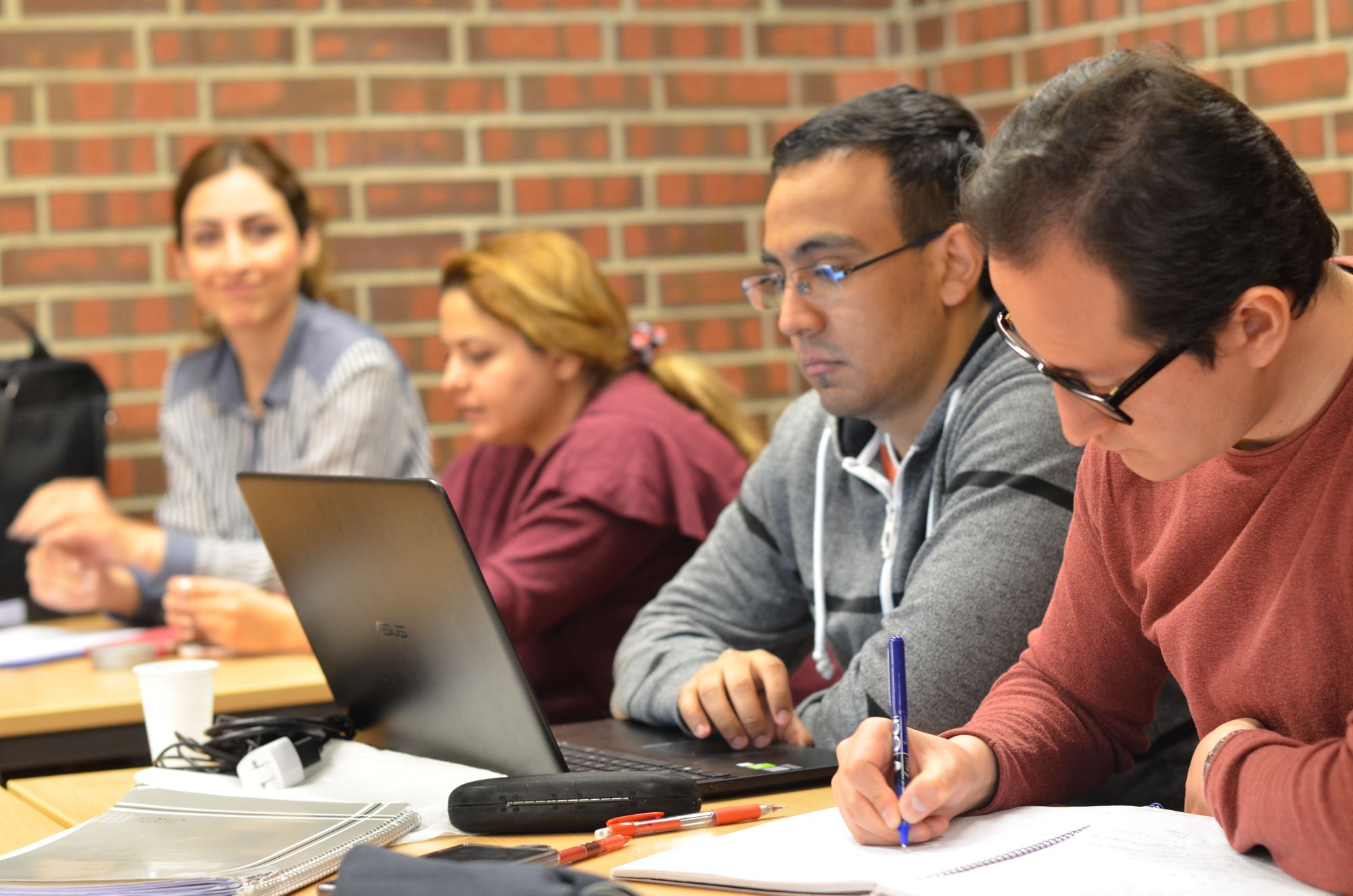
In Stock Photo: Use of OpenLab with University of Stavanger

Enhancing Petroleum Engineering Education

By using the OpenLab simulator, students are able to apply theoretical knowledge in a virtual, yet realistic, drilling environment. This approach not only enhances their understanding of drilling dynamics but also prepares them for real-world challenges within oil & gas, geothermal energy, and CO2 storage, in particular.

Setting New Standards

This achievement not only showcases the scalability and effectiveness of the simulator but also sets a new standard for educational practices in engineering. The ability of students to run realistic simulations highlights the simulator's advanced technology and reliability, crucial for training the next generation of engineers.

"We are thrilled to see OpenLab being utilized to its full potential, bringing practical and impactful education to students globally," said Jan Einar Gravdal, project manager of OpenLab in NORCE. "This record-setting event is a testament to the collaborative efforts between academia and industry to foster innovation and learning."

Looking Forward

Since the launch in 2018, OpenLab continues to support educational institutions around the world in adopting advanced simulation technologies. In 2024, more than 3.000 people have visitet OpenLab Drilling. The record of simultaneous users set by Texas A&M University not only enhances the learning experience for current students but also paves the way for future educational enhancements.

For more information on how OpenLab can be integrated into educational programs, visit OpenLab's website.

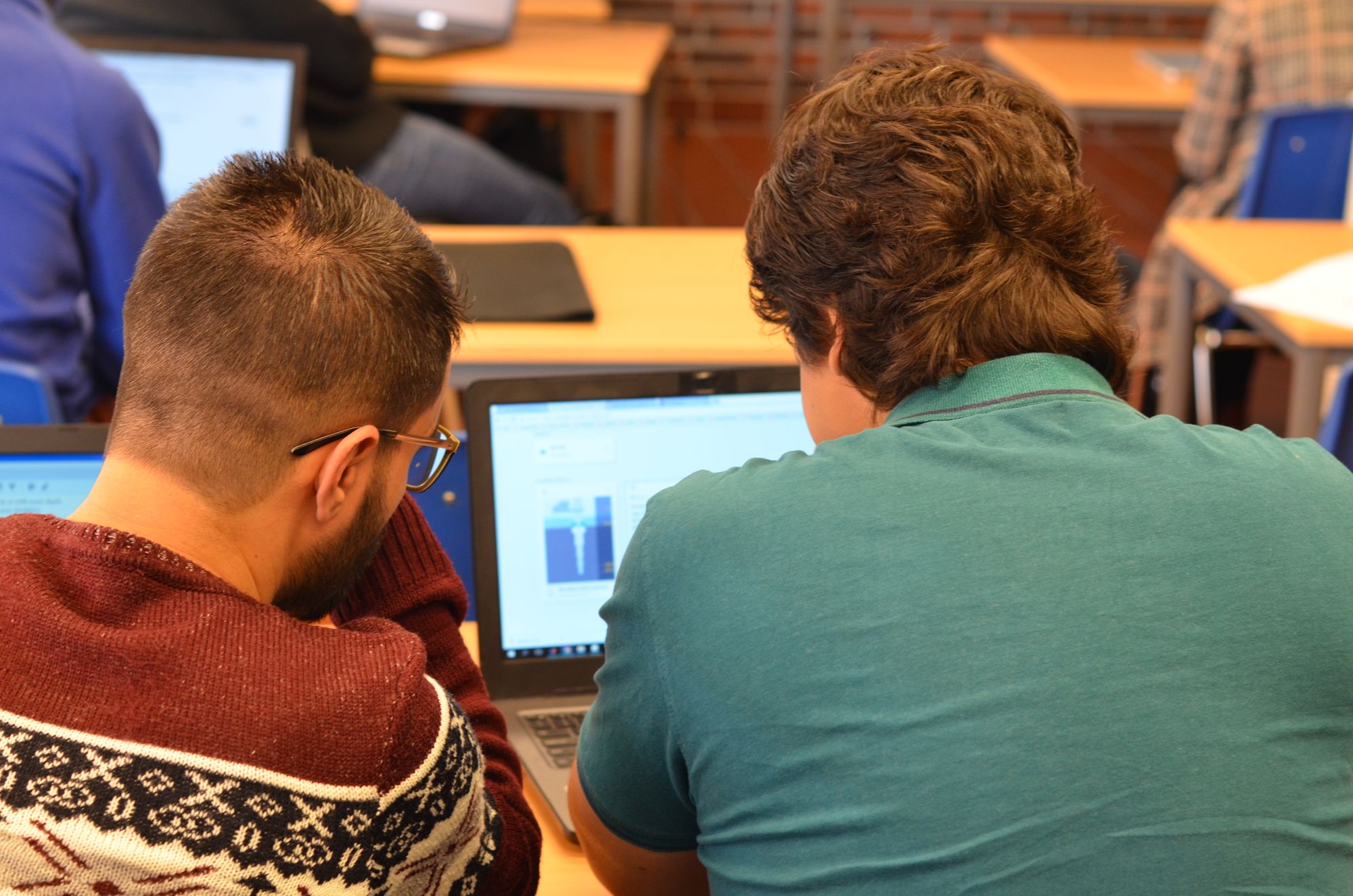
In Stock Photo: Use of OpenLab with University of Stavanger

Who is using OpenLab:

  • University of Stavanger
  • NTNU
  • Aker BP
  • Maersk Drilling
  • Equinor
  • University of Calgary